Showing posts with label Independent Component. Show all posts

Thursday, April 21, 2016

Blog 22: Independent Component 2


LITERAL
(a)“I,  Julianne General, affirm that I completed my independent component which represents 30 hours of work.”
(b) Cite your source regarding who or what article or book helped you complete the independent component.


For this independent component, I shadowed under 3 different anesthesiologists to gain more insight into how other anesthesiologists work aside from my mentor. I followed Dr. Zhuang T. Fang (from UCLA Stein Eye Center), Dr. Park (another doctor from Desert Valley Medical Center), and Dr. Lorna Wood (from Montclair Medical Center).

(c) Update your Independent Component 2 Log (which should be under your Senior Project Hours link)


(d) Explain what you completed.   


For each of the 3 doctors, I shadowed for at least 10 hours over the course of different days. And each doctor specialized in different aspects. For example, Dr. Zhuang T. Fang from UCLA is an attending for anesthesia residents and he specializes in anesthesia for eye surgeries. When I was with Dr. Park, I got to see a lot of urological surgeries (most patients have kidney stones). And when I was with Dr. Lorna Wood, I got to see a lot of OB cases, so they were epidural placements and deliveries.
 
(e) Defend your work and explain the component's significance and how it demonstrates 30 hours of work.   Provide evidence (photos, transcript, art work, videos, etc) of the 30 hours of work.   


Because my essential question asks about how an anesthesiologist is able to ensure the safety and comfort of their patients, I didn't want to just see how one person does their job. My mentor is very experienced and has helped me so much along the way, but people do a lot of things differently. I thought that by exploring other areas that anesthesiologists are also involved in, it could help better support the answers I could come up with for my EQ. So, I spent days with 3 different anesthesiologists to see different aspects of the job.

Here are some photos I've taken:
UCLA Stein Eye Center (I was with Dr. Zhuang T. Fang)


(This is the fancy sign at the front of the building)
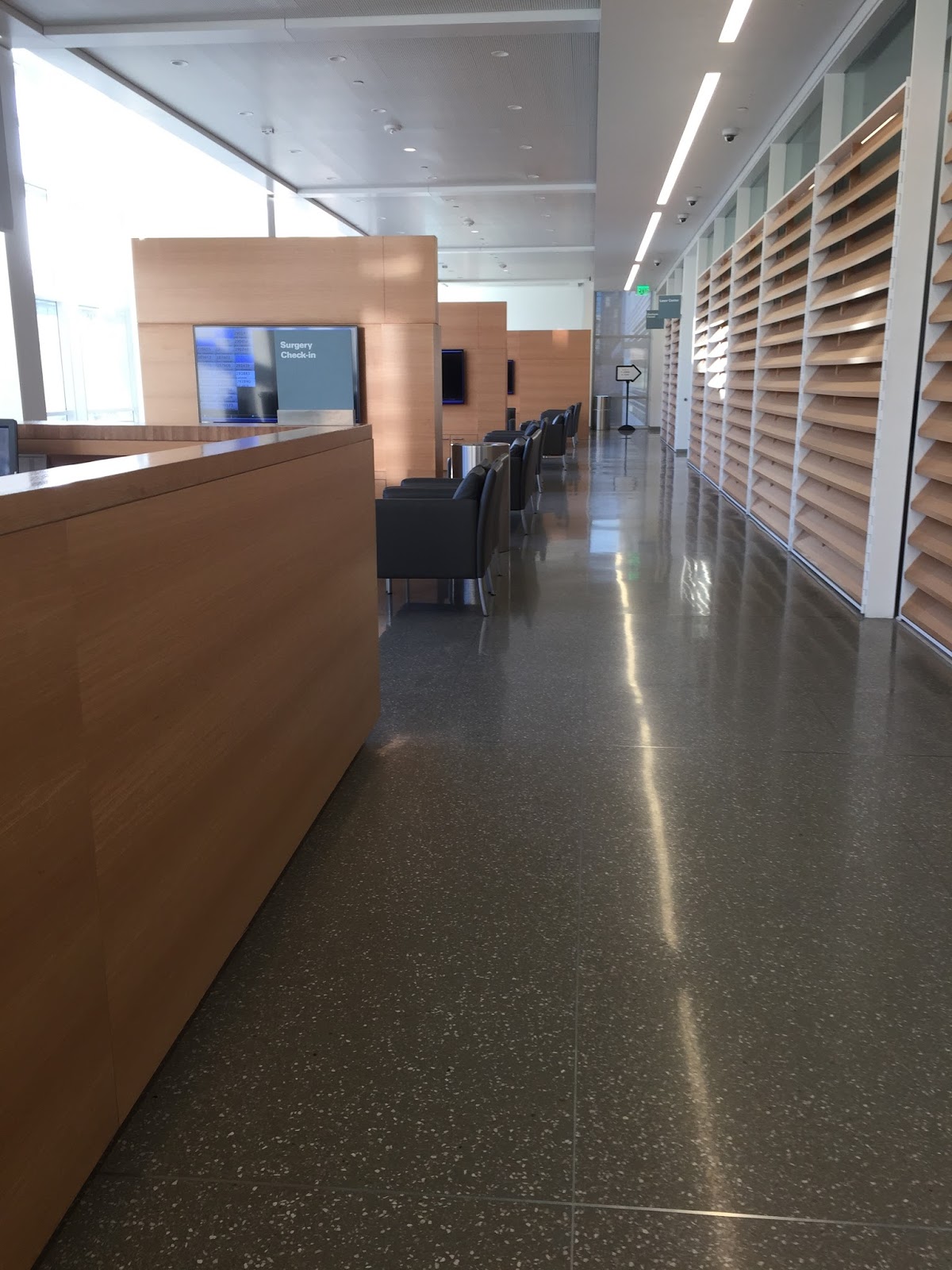

(This is the entrance to the beautiful new building. It was so fancy!!)

(This is the observation room adjacent to OR 1. I had to go down a crazy flight of stairs from the main entrance to get here and they had a fancy machine that gives you scrubs.)

(This was my view of the operating room before one of the surgeries started.)
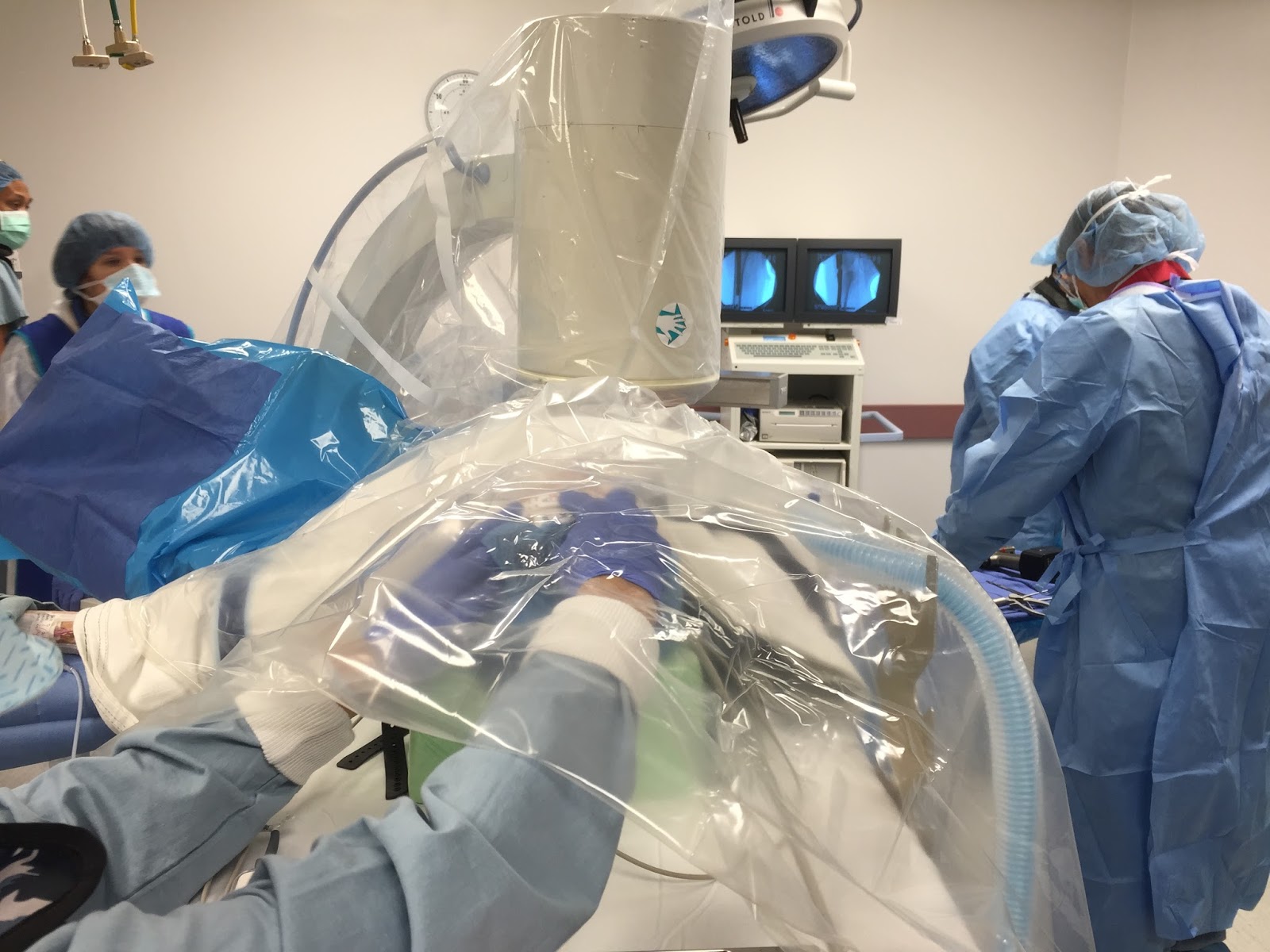
(Unfortunately, due to HIPAA laws, I was not allowed to take photos of the patients having surgery, but I was able to sneak some photos while the lights were off. You can sort of see the screen of a person's eye while getting cataract surgery.)


---

Montclair Medical Center (I was with Dr. Lorna Wood)


(This is one of the hallways in the OR dept.)

(This is one of the supply rooms stocked with a bunch of medical supplies.)

(This is Dr. Lorna Wood showing a breathing mask.)

(Dr. Wood is checking the schedule for the day's surgeries.)

(These are more supplies that stock the OR. There was a lot of stuff there.)

(This is me standing next to a baby warmer/incubator for c-sections.)


---

Desert Valley Medical Center (I was with Dr. Park)

(This is one of the operating rooms with a Da Vinci machine on the left.)

(I got to help set up the operating table for one of the cases that day.)

(This is me while we waited for the patient to be brought down from the patient floors.)

(This is known as a glidescope. It's a fancy version of a regular laryngoscope blade because it has a camera and light.)
(This is a propofol infusion pump.)

(This is me in the waiting room after a long day.)


(f)How did the component help you answer your EQ? Please include specific examples to illustrate how it helped. 

This component helped me see the different sides of anesthesia that I had not known much about. Because my mentor works mostly on "bread and butter" surgeries. I wanted to experience how the principles that my mentor had taught me applied to other aspects of the job of an anesthesiologist. And in watching these 3 other doctors, I had such a great experience learning from them and getting to see how the job is done.

For example, one thing that Dr. Park said to me that has stuck to me was about how he thinks of putting a patient under anesthesia. He said it's sort of like flying a plane. You start out by putting them under anesthesia slowly until they're completely out and you keep them at that "altitude" throughout surgery. Once you know surgery is about to be done (in his analogy, once you're arriving at your destination), you can start to slowly wake up the patient. It's funny because I remember that as he was telling me this, as if his timing was so perfect, the patient started responding and waking up from a surgery that had just finished.

Another example is my experience going to UCLA. Being that Dr. Fang is a professor, he was very knowledgeable and explained whatever he was doing throughout the day. He allowed me to follow him as he checked on his patients before surgery and there were a lot of anesthesia residents roaming around the facility as well. Dr. Fang even gave me some of his published works regarding anesthesia that I was able to use as resources. One of those that I found very fascinating was his mixture of drugs that he uses when he puts his patients under Monitored Anesthesia Care (MAC). I guess I hadn't thought much about putting the drugs all in one large syringe, as I had only seen drugs laid out individually in small syringes prior to visiting. It was this experience that really helped me form my answer 1 because I saw him use this mixture on many of his patients. I saw how it affected them and to see their satisfaction in the end seemed very rewarding for Dr. Fang. I could tell that he really cared about his doctor-patient relationship. He even told me that he still keeps in great contact with a few of his patients and he would email them to see how they're doing.

Dr. Lorna Wood also talked about this aspect with me a lot. She explained to me why she loves doing what she's doing (and also warned me not to go into medicine if you just want the good pay). She told me about her struggle of coming to America from the Philippines and having to retake tests to certify that she can practice in the United States. She said that it's very important to care about your patients because you won't enjoy your job otherwise. And despite the hard work she has to do every day, she told me it's all worth it in the end if she can help bring someone into the world or save someone's life. When I asked her my essential question and her thoughts on it, she ensured that I also mention the importance of the doctor-patient bond and trust that has to be developed in the minutes that anesthesiologists have before a surgery. Ensuring a patient's safety and comfort can't come if the doctor doesn't first care about their patients. And this brought about a different perspective to my project that I hadn't really thought about before, so for that I'm very grateful that Dr. Wood was able to share that with me.


Wednesday, February 10, 2016

Blog 16: Independent Component 2 Approval


[UCLA Wasserman Building.]

1.  Describe in detail what you plan to do for your 30 hours.

I plan to further observe procedures done by anesthesiologists from other hospitals outside of my mentorship to broaden my knowledge of how other anesthesiologists may perform procedures differently apart from my mentor. There are two other hospitals in particular that I plan on observing other anesthesiologists at work. There is a third hospital that I plan to visit as well, however I still have to arrange for a day.

2.  Discuss how or what you will do to meet the expectation of showing 30 hours of evidence.

On Friday, February 12, I will be visiting the UCLA Wasserman Building at the Stein Plaza on Westwood Blvd. It is the neurosurgery building at UCLA. There I will shadow under Dr. Zhuang T. Fang, the anesthesiologist I interviewed for Interview #3. He allowed me to observe surgeries for the whole day. (basically from 7AM until all surgeries for the day are done).

I plan to also observe surgeries at the Chino Valley Medical Center. There I will also observe surgeries throughout the day under another anesthesiologist. I have not yet arranged for a specific day, but watching more surgeries done by a variety of anesthesiologists is more beneficial.

I volunteer at the San Antonio Regional Hospital in Upland in Maternity every Sunday. There are always anesthesiologists that come by regarding patients and I often get the chance to ask them questions and if asked, observe epidurals. What I am most interested in for this case is how anesthesiologists interact with their patients to make them more comfortable.


3.  Explain how this component will help you explore your topic in more depth.

Dr. Zhuang T. Fang is an attending for UCLA anesthesiology residents, meaning that he teaches and watches students perform anesthesia procedures for training. I feel that with his many years of experience will be helpful in understanding more about my topic.

I have had previous experience at Chino Valley Medical Hospital, but have not really observed procedures there. I have known different doctors at the hospital and watching different anesthesiologists perform procedures can allow me to get a better grasp of how anesthesiologists can make patients safer and more comfortable. People in general do the same tasks differently, so being able to watch how other doctors of the same profession perform anesthesia can offer more options for what I can look into regarding research, more support for answers to my EQ, and about the topic in general. I expect that the time spent at UCLA and at Chino Valley Medical Center will take up a majority of the time for this IC. However, I feel that some time can be spent around anesthesiologists at San Antonio Regional Hospital to see how they interact with patients undergoing labor, as this is still an important aspect of anesthesiology. Also, I volunteer every Sunday at the hospital in the Maternity Dept. in which I see and interact with these patients all the time. With this, however, I aim to focus more on the anesthesiologist's interactions with the patients and how they communicate, as this is related to a possible EQ answer.


Friday, February 5, 2016

Independent Component 1


LITERAL

“I, Julianne General, affirm that I completed my independent component which represents 30+ hours of work.” My mentorship at Desert Valley Medical Hospital under Dr. Richard Kakes has helped me learn more about anesthesiology in the field and in action. Throughout my mentorship, I have seen a variety of surgeries, such as gallbladder removal, appendix removal, knee replacement (which is another story in itself because I nearly passed out from the smell), circumcisions, different prostate surgeries, cyst removal, and also repairing of fractures. Each day brings about a new experience and another set of fun stories to share.

 
INTERPRETIVE 

I completed extra hours of mentorship for this independent component, because watching what actually happens with the job is the best way to learn a topic like anesthesiology. I spent extra time observing what happens, during surgeries and this has helped me attain a greater grasp of what I read in research I find on anesthesia. I know more about the drugs used and the most I watch my mentor intubate a patient, the more I notice minor details that an experienced anesthesiologist would do to further ensure a patient's safety.

Here are some photos while at mentorship:


APPLIED

There have been several cases that have stuck out to me that have broadened my knowledge of anesthesia. For example, the story I shared during my lesson 2. My mom and I were about to leave for the day when my mom received a call from the ER saying that a woman was dying and needed emergency surgery. She had ruptured a stomach ulcer and when we saw her she was dying right in front of us. We brought her in to the OR and I sat in the corner and watched as she was quickly put under anesthesia. We were there for 2 hours and throughout that time, her condition was very unstable. In the end, we took her to the ICU because she was still in critical condition. This experienced helped me figure out an answer to my EQ, being that anesthesiologists should be well-versed in the drugs they use.

Another experience was when I walked in the OR and my mentor was wrapping up a surgery with a patient that was just waking up. But I was totally surprised when I saw the tall, grown man sobbing in so much pain after having his gallbladder removed. My mentor told me that he was a drug addict, so the drugs don't mix well with any narcotics he was able to give him throughout the surgery. He also said that this is normal for people that abuse drugs. It just surprised me because I hadn't seen anything like it before.

I can also recall one time that I was allowed to stand right where the surgeon was standing. For one case, a woman had to have 2 masses removed from her fallopian tubes. It was a long surgery and at one point the surgeon had to take a short break. When he came back, he asked me if I wanted to stand on the stepping stool to look inside and see what he had been working on. It was quite a unique experience because not only did I get to see the inside, but I found it interesting to still see her lungs moving, still breathing for her while under anesthesia.

There was one time I watched a circumcision of a 10-year-old boy. He was very scared for his surgery and I watched as my mentor calmed him down by showing him the oxygen mask while still in the holding room. He talked to him very softly and explained that he it would be over before he knew it. And after the surgery, right as the boy was waking up, (and perfect timing, I might add), my mentor explained that usually children cry a lot as a reaction to anesthesia. It was just normal. And sure enough, the boy woke up already crying and shivering.

On my first day of mentorship, I had just finished watching the first surgery of the day. And as I was walking out of the OR, I suddenly heard a woman wailing and screaming in pain across the hallway. I saw the surgical team move her into another OR. She was about to give birth but needed an emergency c-section. It was a very interesting experience because in a matter of minutes, the woman went from wailing in pain to being under anesthesia.

Wednesday, October 7, 2015

Blog 8: Independent Component 1 Proposal


[Example of what is taught in CPR class.]

1.  Describe in detail what you plan to do for your 30 hours.

For 3 hours every Sunday I work in OB at San Antonio Regional Hospital. I help the nurses provide for the patients and I could get the chance to observe the anesthesiologists that come by to give patients epidurals before c-sections. I was also considering signing up for a CPR class, as it is something that all people going into the medical field should know. I also would like to shadow my mentor more at work because every time I go to visit, there's always something new to learn about the job. These are the main ideas I've had about this component, however I'm not exactly sure how to showcase my topic well. I don't know exactly what my best option would be.


2.  Discuss how or what you will do to meet the expectation of showing 30 hours of evidence.

At the hospital I volunteer at, volunteers are required to log in their hours before each shift, so I would be able to keep track of my hours through that. I'd take pictures (with permission) of the patients/doctors as I observe and document the highlights. If I'm able to take a CPR class, I would spend the hours taking the course and show those hours via pictures and my progress. By shadowing my mentor, I would log the hours by writing about each surgery I observe each day and summing up what I've learned. 

3.  Explain how what you will be doing will help you explore your topic in more depth.

Ideally, shadowing my mentor is where I feel like I gain the most knowledge. Being able to see what he does on the job really helps me see the things I read about in action and I'd document the most interesting experiences. I'd want to observe as many surgeries as I can in the process. In addition, he often performs epidurals as well while on call. But both shadowing my mentor and volunteering at the hospital are great resources for experience in different aspects of anesthesiology. Taking a CPR class would be beneficial because resuscitating a person is one of the basic skills an anesthesiologist or any doctor should know.

4.  Update your Senior Project Hours log.


[Anesthesia jokes are great.]